

Preparing Your Commercial Roof for Monsoon Season: Essential Tips for Southwest Properties
In the Southwest—spanning Arizona, Nevada, New Mexico, and parts of surrounding states—the monsoon season arrives like clockwork, transforming dry deserts into landscapes battered by intense thunderstorms. Officially running from June 15 to September 30, as defined by the National Weather Service, this period sees peak activity in July and August. What starts as a welcome relief from scorching heat quickly escalates into powerful storms bringing sudden heavy rainfall, gusty winds up to 60 mph or more, flash flooding, massive dust storms known as haboobs, and flying debris. These conditions can strike without warning, turning a routine summer day into a potential disaster for commercial properties.
For business owners and property managers in the region, commercial roofs—often flat or low-slope designs using materials like TPO, EPDM, or modified bitumen—are particularly vulnerable. Ponding water from poor drainage can weaken membranes over time, leading to leaks that damage interiors, inventory, and equipment. High winds tear at flashing and seams, while debris clogs drains and scuppers, exacerbating flooding risks. The result? Costly repairs, operational downtime, disrupted tenant activities, and even mold or structural issues that threaten your building’s safety and value.
The good news is that proactive preparation can mitigate these threats. With the current off-season (early 2026 being an ideal window), now is the perfect time to act before storms ramp up. By addressing potential weaknesses early, you’ll not only avoid emergency fixes but also extend your roof’s lifespan, improve energy efficiency, and protect your investment—delivering strong ROI through reduced long-term costs and preserved property value, much like the benefits of a new roof installation.
In this guide, we’ll walk you through essential, actionable steps tailored to Southwest commercial properties, from professional inspections to emergency planning. Follow these tips to ensure your roof withstands the monsoons and keeps your business running smoothly.
1. Schedule a Professional Roof Inspection Early
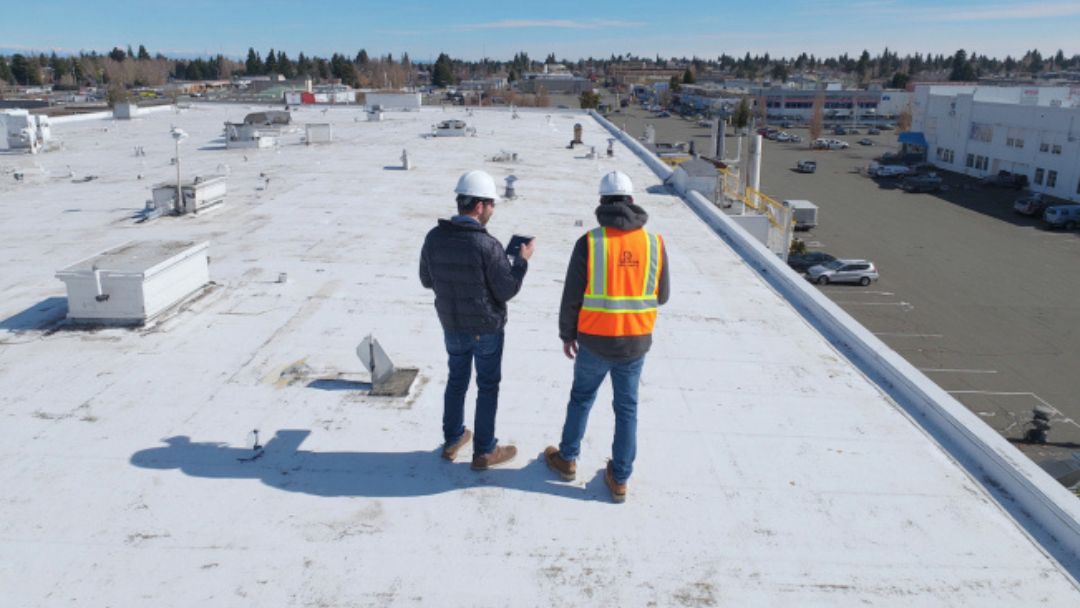
The foundation of effective monsoon preparation starts with a comprehensive professional roof inspection—and timing is everything. With the current date being late January, you’re in the ideal window to schedule one. Experts recommend conducting thorough inspections in late winter or early spring (January through April), well ahead of the official monsoon start on June 15. This advance planning gives you ample time to complete any necessary repairs or reinforcements before the first storms hit, avoiding rushed, costly emergency work during peak season when roofing contractors are in high demand.
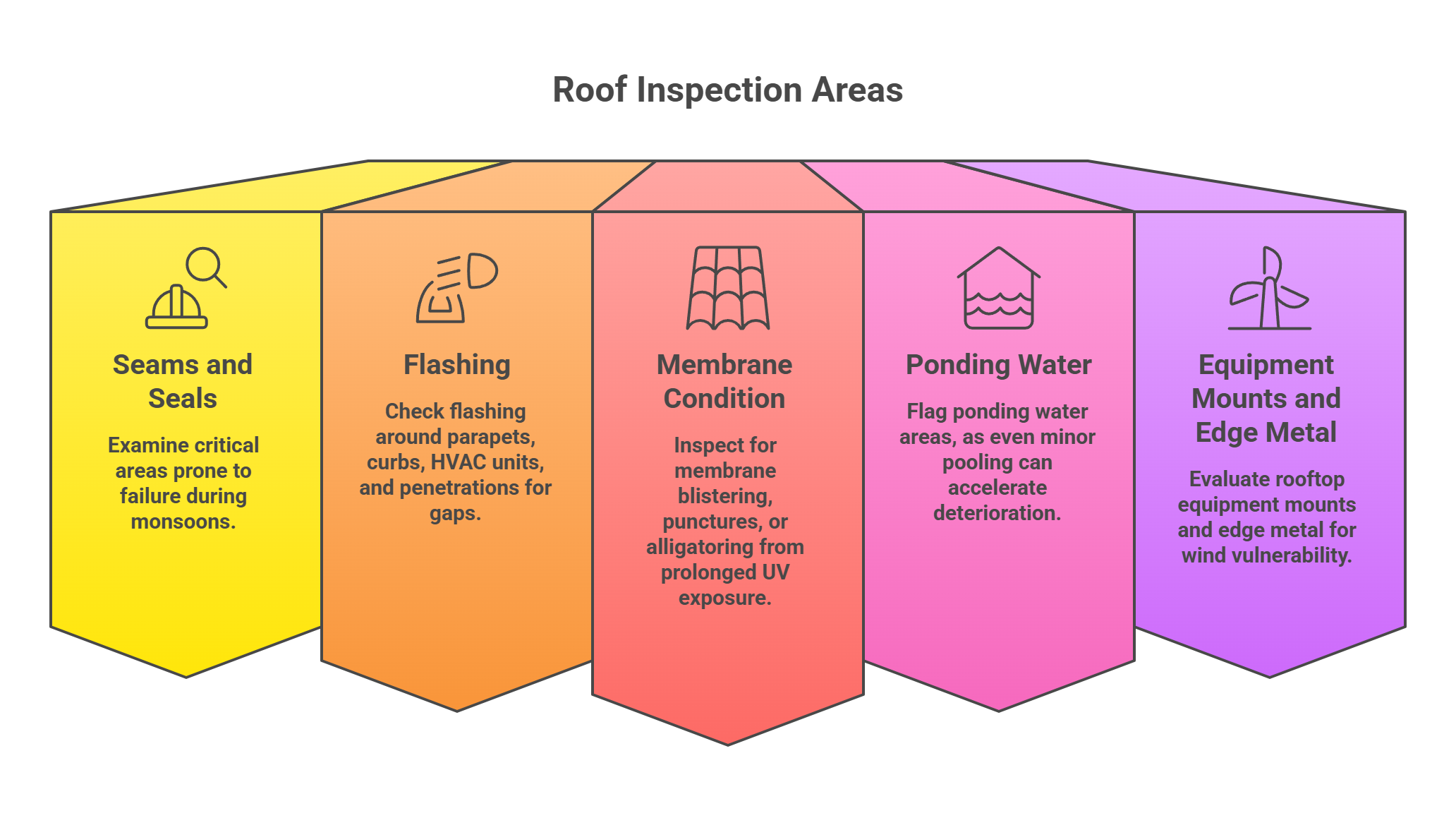
A professional inspection goes far beyond a quick visual check from the ground. Certified commercial roofers, experienced with Southwest-specific systems like single-ply membranes (TPO or EPDM), modified bitumen, or built-up roofs, will perform a detailed assessment. They’ll examine critical areas prone to failure during monsoons: seams and seals for cracks or separation, flashing around parapets, curbs, HVAC units, and penetrations (such as vents or skylights) for gaps that could allow water intrusion. Inspectors also check for membrane blistering, punctures, or alligatoring from prolonged UV exposure—a common issue in the intense desert sun. Ponding water areas, where low spots collect rainwater, are flagged, as even minor pooling can accelerate deterioration when heavy monsoon downpours overwhelm drainage. They’ll also evaluate rooftop equipment mounts and edge metal for wind vulnerability.
Property managers might spot obvious damage, but professionals uncover hidden issues like subtle drainage slopes that have shifted over time or early signs of membrane fatigue that could lead to leaks under storm stress. In the Southwest, where haboobs and microbursts are frequent, these inspections often reveal wind-uplift weaknesses that DIY checks miss. According to industry reports, proactive inspections can identify 80% of potential problems before they escalate, saving thousands in repairs and preventing interior water damage that disrupts business operations.
Hiring a local expert familiar with regional challenges ensures tailored recommendations, such as enhancing wind resistance or improving waterproofing. At SW Commercial Roofing, our team specializes in these certified inspections, providing detailed reports with prioritized action items to keep your property protected.
2. Clear Debris and Ensure Proper Drainage
One of the most critical yet often overlooked aspects of monsoon preparation is maintaining clear debris and optimal drainage on your commercial roof. In the Southwest, where flat or low-slope roofs dominate commercial buildings, water has nowhere to go but across the surface toward designed drainage points. During monsoons, intense rainfall—sometimes dumping inches in mere hours—can overwhelm even well-designed systems if they’re clogged or compromised.
Ponding water, where rainwater collects in low spots for more than 48 hours, is a primary culprit in roof failures. It accelerates membrane degradation, promotes algae and vegetation growth, adds unnecessary weight (potentially stressing the structure), and increases leak risks as water seeps into vulnerabilities.
Debris buildup exacerbates these issues. Dust storms and haboobs common in Arizona and Nevada deposit fine silt and sand, while wind-blown leaves, branches, and urban pollutants accumulate over the dry season. Clogged drains lead to backups, turning minor showers into major flooding events on the roof.
To address this proactively:
- Remove all surface debris: Sweep or vacuum the entire roof to clear dirt, gravel displacement, leaves, trash, and any loose materials. Pay special attention to corners and around HVAC units where debris tends to collect.
• Clean drainage components thoroughly: Inspect and clear internal drains, scuppers (openings at the roof edge), gutters, and downspouts. Use tools like plumbing snakes or high-pressure water (professionally, to avoid damage) to remove blockages. In Southwest climates, mineral buildup from hard water can also restrict flow.
• Identify and correct ponding areas: Walk the roof after a light rain or hose test to spot low spots. Minor issues can often be resolved with additional tapering or crickets (small peaked structures that direct water flow). For persistent problems, consider retrofitting with tapered insulation systems that create positive slope toward drains.
Regular maintenance like this not only prevents monsoon damage but also complies with warranty requirements for many roofing systems. While property teams can handle basic cleaning, involving professionals ensures safety (roofs can be hazardous) and uncovers underlying drainage design flaws. A small investment here can prevent thousands in water damage claims.
3. Perform Preventive Repairs and Reinforcements
Once your inspection is complete and issues are identified, the next crucial step is addressing them with targeted preventive repairs and reinforcements. In the Southwest’s harsh climate—marked by extreme heat, UV radiation, and abrupt monsoon storms—small vulnerabilities can quickly escalate into major failures. Delaying fixes invites water intrusion during heavy rains, wind uplift in gusty conditions, or accelerated wear that shortens your roof’s overall lifespan.
Acting now, while weather is cooperative and contractors are readily available, ensures repairs are done thoroughly and cost-effectively.
Common pre-monsoon repairs focus on sealing and strengthening the roof system:
- Seal cracks, blisters, and open seams: These are entry points for water. Use compatible sealants or heat-welding for single-ply membranes like TPO or EPDM to restore watertight integrity.
• Repair or replace damaged flashing: Flashing around edges, penetrations, and curbs often fails first in high winds or thermal expansion. Upgrading to reinforced metal or membrane flashing prevents blow-offs and leaks.
• Reinforce loose or deteriorating membranes: Secure lifted areas with adhesives or mechanical fasteners, especially in wind-prone zones. For older roofs, adding reinforcement layers can bridge the gap until a full replacement.
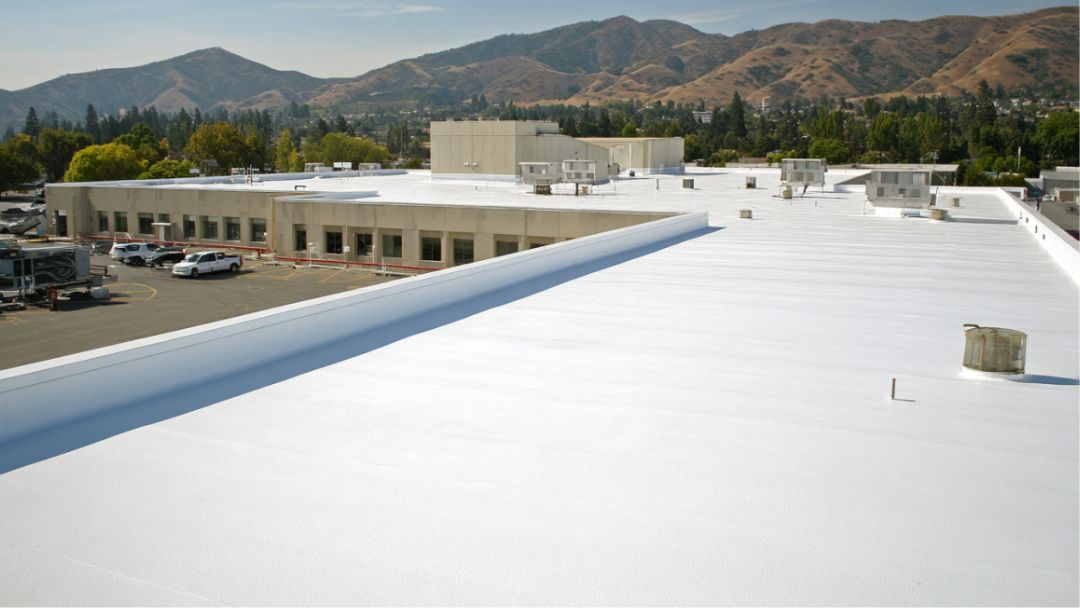
• Apply protective coatings: In the desert Southwest, silicone or acrylic coatings provide an extra barrier against UV damage and ponding water, while reflective options (like white coatings) reduce heat absorption and cooling costs year-round.
For roofs showing significant wear, consider upgrades such as enhanced wind-resistant features (e.g., higher fastener density) or improved insulation for better energy efficiency. These not only bolster monsoon resilience but also align with sustainability goals and potential rebates.
While some minor sealing can be DIY, commercial roofs demand professional expertise to avoid voiding warranties or causing further damage. Trusted roofers use manufacturer-approved materials and techniques, ensuring long-term performance. Investing in these repairs now can prevent exponential costs later—often saving 5-10 times the expense compared to post-storm emergency fixes.
4. Address Surrounding Landscape and Potential Hazards
While much of monsoon preparation focuses on the roof itself, don’t overlook the surrounding environment—it’s a major source of storm-related hazards in the Southwest. High winds from thunderstorms and haboobs can turn everyday landscape features into projectiles or debris sources that damage membranes, clog drains, or even puncture roofing materials.
Key steps include:
- Trim overhanging tree branches: Trees near your building can snap or shed limbs during gusts over 50 mph, common in monsoon microbursts. Prune branches that extend over the roof to prevent impact damage and reduce leaf/debris accumulation.
• Secure loose rooftop equipment: HVAC units, satellite dishes, antennas, and signage should be firmly anchored. Loose items can shift or fly off in high winds, causing tears in the membrane or injuring responders below.
• Clear ground-level areas: Remove or secure loose objects around the building perimeter, such as outdoor furniture, dumpsters, or construction materials. This prevents them from becoming airborne or blocking drainage paths during flash floods.
These measures are especially vital in urban and suburban Southwest settings, where dust storms amplify debris risks. Regular landscape maintenance not only safeguards your roof but also improves site safety for tenants and visitors. While many tasks can be handled by grounds crews, consult professionals for high-reach trimming or equipment securing to ensure compliance with safety standards.
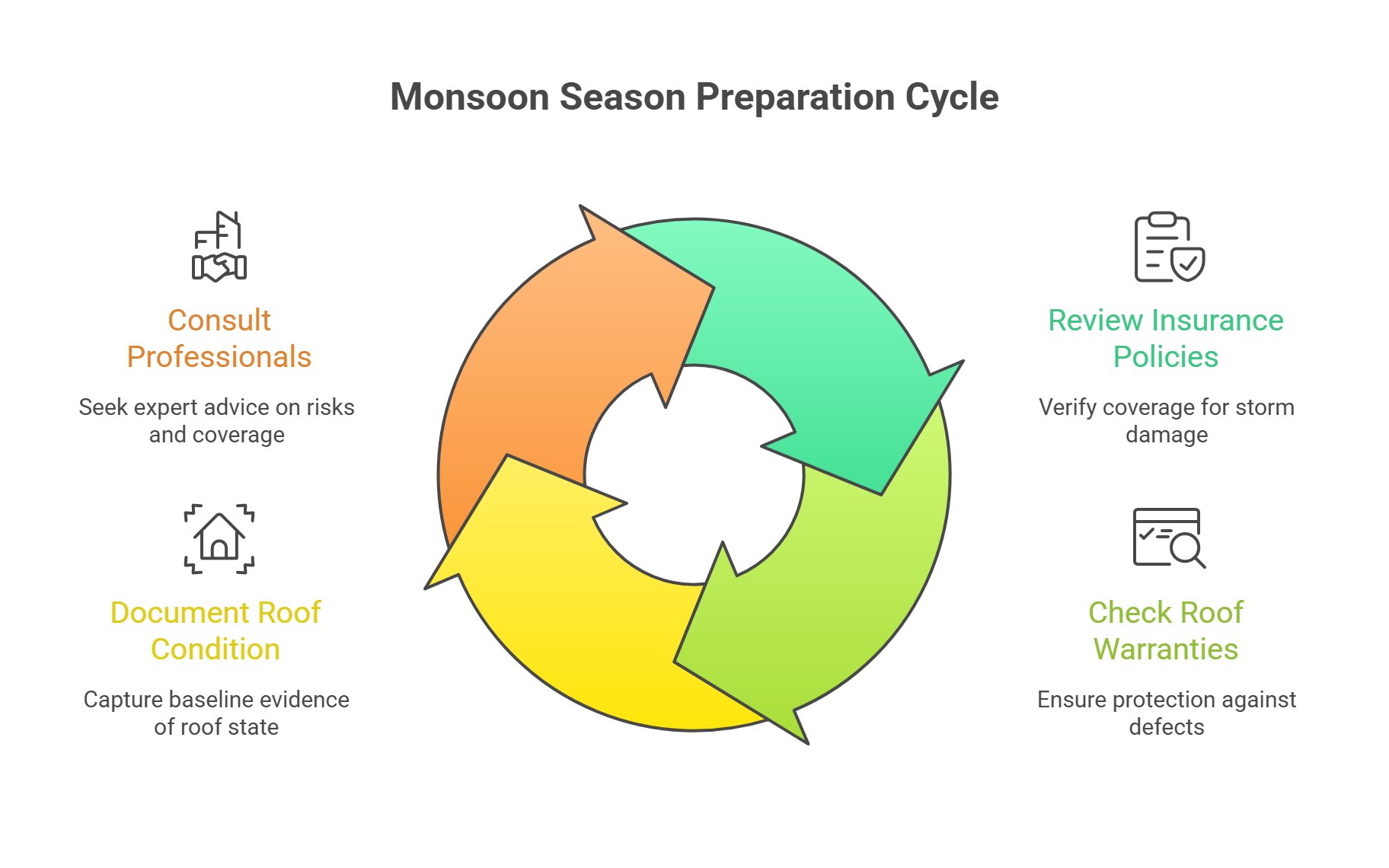
5. Review Insurance, Warranties, and Documentation
As you prepare for monsoon season, taking time to review your insurance policies, roof warranties, and documentation can save significant headaches—and money—down the line. Storm damage from high winds, hail, or flooding isn’t always fully covered, and understanding your protections now prevents disputes during a crisis.
Start by:
- Confirming insurance coverage: Contact your provider to verify that wind, hail, flood, and water damage are included. Note common exclusions, such as neglect-related issues (e.g., poor maintenance causing leaks). Consider adding or increasing coverage for business interruption if monsoons could halt operations.
• Checking warranties: Review manufacturer warranties for your roofing system (e.g., TPO or EPDM often cover defects but require proof of proper installation and maintenance). Contractor workmanship warranties may also apply—ensure monsoon-specific events like wind uplift are addressed.
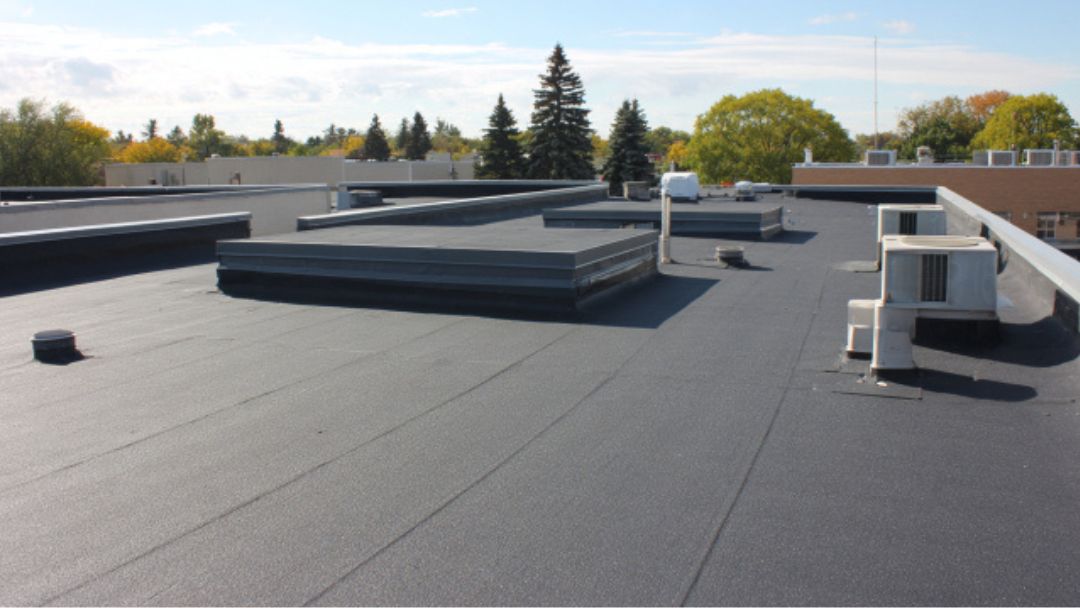
• Documenting the current condition: Before storms arrive, take detailed photos and videos of the entire roof, including close-ups of seams, flashing, drains, and any recent repairs. Date-stamp everything. This baseline evidence is invaluable for insurance claims, proving that damage was storm-related rather than pre-existing.
Maintaining organized records demonstrates due diligence, which can strengthen claims and preserve warranty validity. If unsure, consult your roofer or insurance agent for a policy review tailored to Southwest risks.
6. Develop a Monsoon Emergency Response Plan
Even with thorough preparation, severe storms can still cause unexpected issues, making a solid emergency response plan essential for minimizing damage and downtime.
Key elements to include:
- Establish key contacts: Compile a list of emergency numbers, including your primary roofing contractor, 24/7 response teams, water extraction specialists, and insurance adjusters. Prioritize local experts familiar with commercial systems for faster service.
• Create a storm response checklist: Outline steps like immediate shutdown of vulnerable areas, monitoring for leaks during the storm, and post-storm inspections for damage (e.g., checking drains and seams right after).
• Stock essential supplies: Keep tarps, plastic sheeting, sandbags, portable pumps, and wet/dry vacuums on-site or readily accessible. These allow temporary fixes to prevent water from spreading indoors.
• Train staff and tenants: Educate building managers and key personnel on warning signs (e.g., unusual noises or ceiling stains) and basic response procedures. Conduct a brief drill to familiarize everyone.
A well-prepared plan reduces response time from hours to minutes, limiting interior damage and costs. Review and update it annually.
Stay One Step Ahead of the Storm – Protect Your Property Now
Preparing your commercial roof for monsoon season isn’t just maintenance—it’s a smart investment that safeguards your property, prevents disruptive emergencies, and delivers real financial returns. By scheduling early inspections, clearing drainage, making key repairs, addressing hazards, reviewing coverage, and planning for emergencies, you’ll minimize risks from heavy rains, fierce winds, and haboobs that define Southwest summers.
These steps extend your roof’s lifespan, reduce energy costs through better efficiency, and protect tenants and operations from costly water damage or downtime—echoing the strong ROI of proactive roofing strategies.
While some tasks can be handled in-house, commercial systems demand professional insight to catch hidden issues and ensure lasting results. Don’t leave your building vulnerable when storms can hit suddenly.
At SW Commercial Roofing, we’re here to help with expert monsoon prep inspections tailored to Arizona and Southwest properties. Contact us today for a free consultation and personalized assessment—secure peace of mind before June arrives. Stay dry, stay safe, and keep your business thriving all season long.