
What Is the Best Roofing System for Warehouses in the Southwest?
Warehouse roofs in the Southwest are exposed to some of the toughest commercial roofing conditions in the country. Intense UV exposure, prolonged heat, thermal movement, and seasonal storms can all take a toll on roofing materials over time. For warehouse owners and property managers, choosing the right system is not just about covering the building. It is about protecting inventory, controlling long-term costs, and avoiding disruptions to daily operations.
So, what is the best commercial roofing system for warehouses in the Southwest? In many cases, TPO, PVC, metal roofing, and roof coatings are among the strongest options, but the right choice depends on the building itself. Roof slope, existing roof condition, energy goals, budget, and the way the warehouse is used all play a role.
In this article, we will break down the most common warehouse roofing systems, compare their strengths, and explain which options tend to make the most sense in hot Southwest climates.
What Warehouses in the Southwest Need From a Roofing System
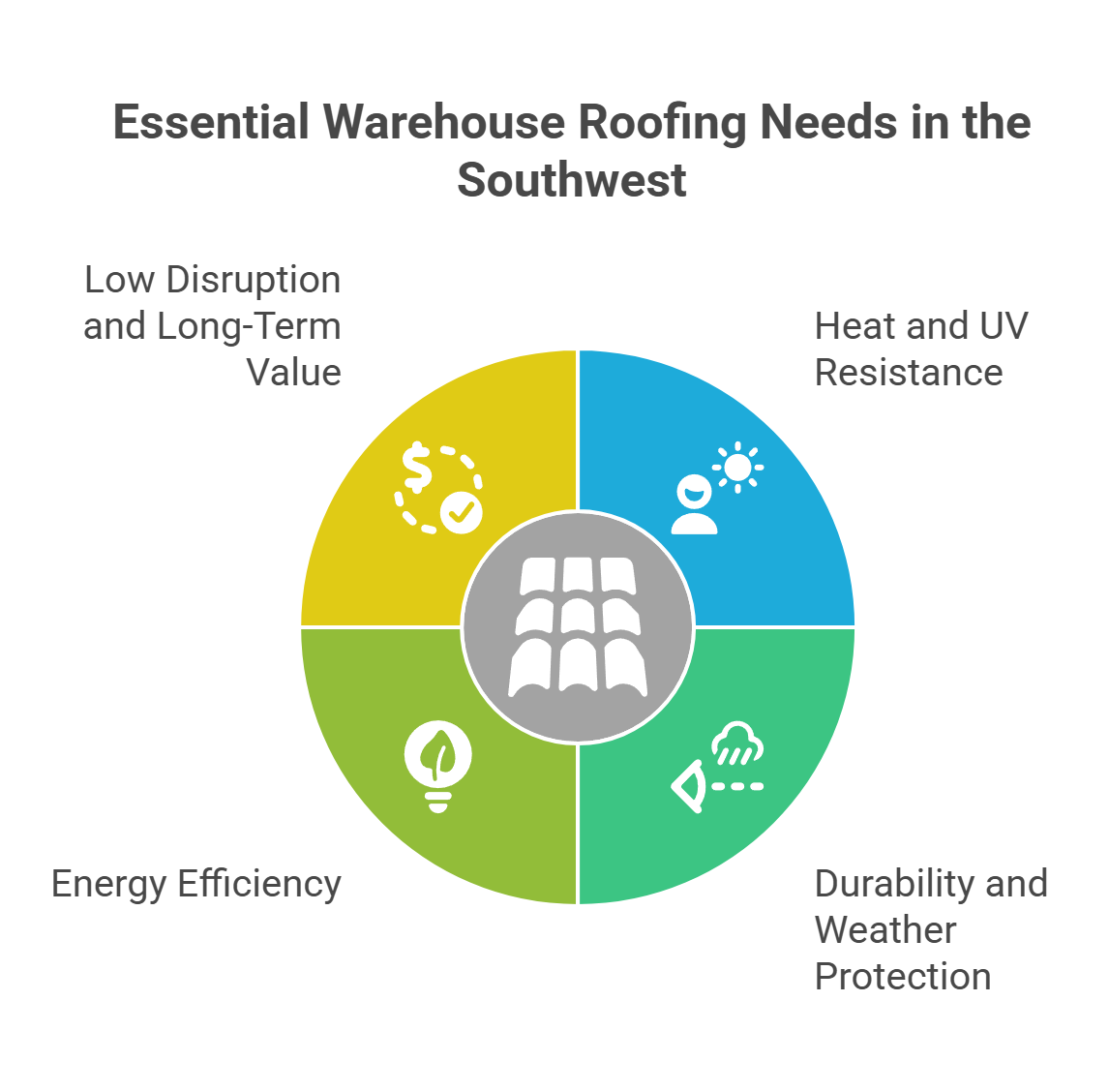
Not every commercial roofing system performs the same way in a warehouse environment, especially in the Southwest. Large roof spans, long hours of sun exposure, and seasonal weather swings put added pressure on both the roofing material and the building as a whole. Before comparing specific systems, it helps to understand what a warehouse roof actually needs to do.
Heat and UV Resistance
Southwest warehouses are exposed to intense sunlight and prolonged high temperatures for much of the year. Over time, constant UV exposure can accelerate material breakdown, while heat buildup can place additional stress on the roof assembly. Roofing systems that handle solar exposure well and help limit heat absorption are often better suited for these conditions.
Durability and Weather Protection
A warehouse roof has to do more than survive sunny weather. It also needs to stand up to wind, debris, heavy rain events, and seasonal storms. Even a small leak can create major problems inside a warehouse, especially when inventory, equipment, or operations are involved.
Energy Efficiency
Because warehouses typically have large roof surfaces, the roofing system can have a major impact on indoor temperatures and cooling costs. Reflective materials and well-designed roof assemblies can help improve energy performance, particularly in hot climates.
Low Disruption and Long-Term Value
Many warehouse owners want a roofing solution that is practical to maintain and does not create unnecessary disruption to daily operations. In most cases, the best choice is not simply the lowest-cost option upfront. It is the system that offers the right balance of performance, service life, maintenance demands, and long-term value for the building.
The Most Common Roofing Systems Used on Warehouse Buildings
Warehouse buildings can use several different commercial roofing systems, but not every option performs the same in a hot Southwest climate. The right fit depends on the building’s roof design, the condition of the existing roof, the owner’s budget, and the long-term goals for the property.
TPO Roofing
TPO is one of the most common choices for warehouse buildings with flat or low-slope roofs. It is popular because it offers strong waterproofing performance and can support energy-efficiency goals in hot climates.
PVC Roofing
PVC is another single-ply membrane commonly used on commercial properties. It is often considered a strong option for warehouse buildings that need durable performance and reliable protection over large roof areas.
EPDM Roofing
EPDM is a well-known commercial roofing material with a long track record. While it can work well in certain applications, its darker surface can be less ideal for warehouses in very hot Southwest conditions where heat reflection is a priority.
Metal Roofing
Metal roofing is often a strong fit for warehouses with sloped roof designs. It is known for durability, long-term performance, and strong value for owners who are planning around lifecycle cost rather than just upfront price.
Roof Coatings
Roof coatings are not a full roofing system in the same way as membranes or metal, but they can be an effective restoration option. When an existing warehouse roof is still in serviceable condition, a coating may help extend its life and improve reflectivity without a full replacement.
Why the Right Choice Depends on the Building
Each of these options has strengths and limitations. That is why the best roofing system for a warehouse depends on the specific building, the condition of the existing roof, and the performance goals the owner is trying to achieve.
TPO Roofing for Warehouses
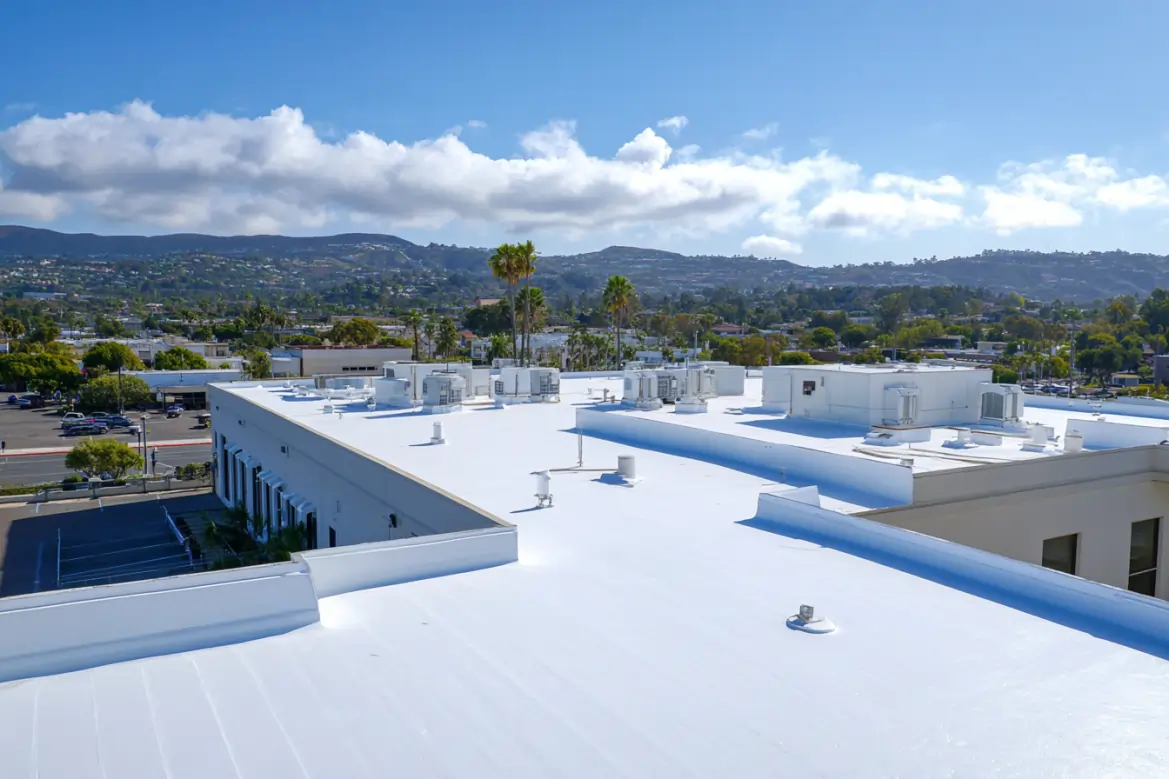
TPO roofing is one of the most common choices for warehouse buildings, especially in the Southwest where heat, UV exposure, and energy performance are major considerations. For many flat and low-slope warehouse roofs, it offers a practical combination of cost-effectiveness, reflectivity, and commercial performance.
Why TPO Is Popular
TPO is widely used on commercial buildings because it is designed for large roof areas and can provide reliable waterproofing when installed correctly. Many warehouses have broad, open roof spans, which makes a single-ply membrane system like TPO a natural fit. It is also a common option for owners who want a roofing system that balances performance with budget.
Benefits for Southwest Warehouses
One of the biggest advantages of TPO in the Southwest is its reflective surface. In hot climates, that can help reduce heat absorption and support better energy efficiency across large warehouse buildings. For facilities that run cooling systems or need more stable indoor temperatures, that can be a meaningful benefit.
TPO can also be a strong choice for owners looking for a modern roofing system that performs well without moving into a much higher price category. For many warehouse properties, it delivers a solid middle ground between upfront affordability and long-term function.
Potential Limitations
Like any commercial roofing system, TPO is not automatically the best fit in every case. Product quality can vary, and installation quality plays a major role in long-term performance. Seams, flashing details, penetrations, and drainage all need to be handled properly. If the roof is poorly installed, the material alone will not make up for that.
It is also important to evaluate the condition of the existing roof before choosing TPO for a retrofit or replacement project. Not every building is the same, and not every existing roof assembly is an ideal candidate.
Best Fit
TPO is often one of the best options for large warehouses with flat or low-slope roofs, especially when the owner is focused on energy efficiency, practical performance, and overall value. For many warehouse buildings in the Southwest, it is one of the strongest all-around systems to consider.
PVC Roofing for Warehouses
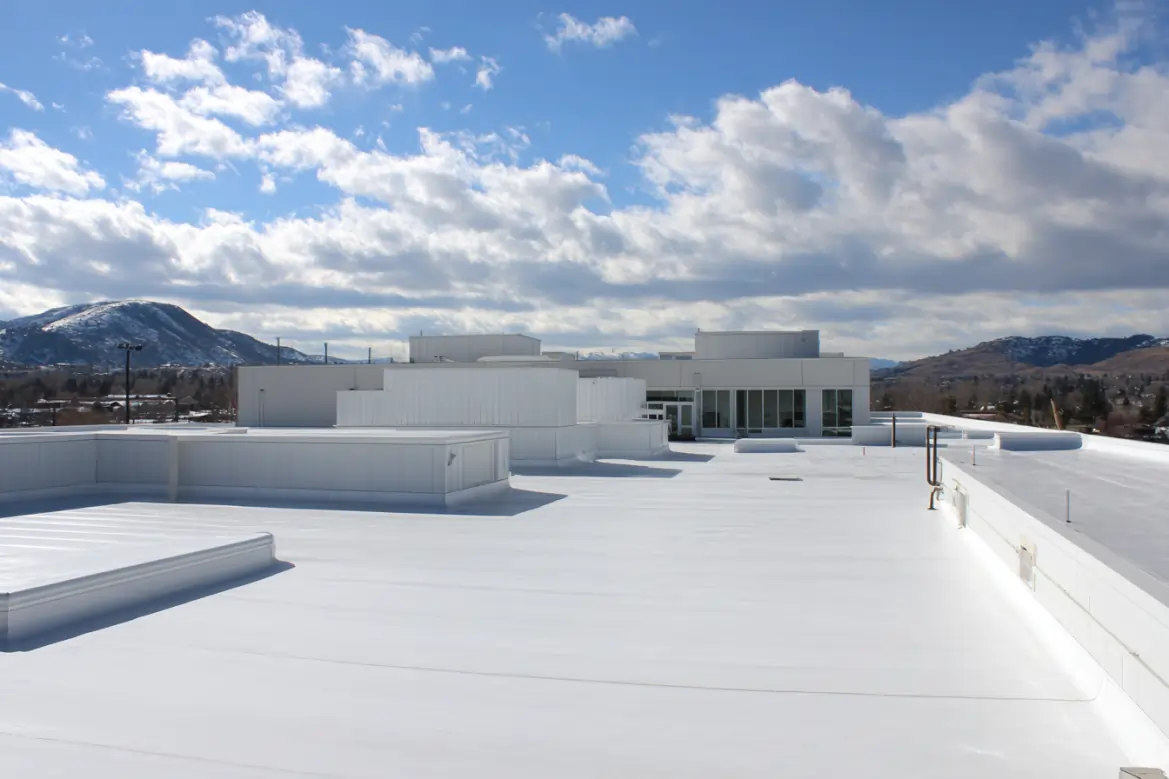
PVC roofing is another strong option for warehouse buildings, especially when durability and long-term waterproofing performance are top priorities. Like TPO, PVC is a single-ply membrane commonly installed on flat and low-slope commercial roofs, but it is often viewed as a more premium option for buildings with tougher performance demands.
Where PVC Stands Out
PVC is known for its strength, flexibility, and dependable seam performance when installed correctly. On large warehouse roofs, that can be a major advantage. Warehouses often have extensive roof penetrations, HVAC equipment, drainage details, and long membrane runs, so a system that performs well across those conditions can be especially valuable.
Benefits for Warehouse Use
For warehouse owners and facility managers, one of the biggest benefits of PVC is its reputation for durable waterproofing. It can be a strong fit for buildings where roof reliability matters not just for the structure itself, but also for protecting stored inventory, equipment, and day-to-day operations.
PVC can also make sense for warehouses tied to manufacturing, distribution, or industrial use where the building may be exposed to more demanding rooftop conditions. In those settings, paying more upfront for a tougher membrane may support better long-term value.
Potential Drawbacks
The main drawback is usually cost. PVC often comes in at a higher price point than TPO, which means it may not be necessary for every warehouse property. For more straightforward warehouse applications, some owners may decide that a less expensive system still meets their needs.
As with any roofing system, performance also depends heavily on proper design and installation. Even a premium membrane has to be matched to the building and installed correctly to deliver the expected results.
Best Fit
PVC is often a strong choice for warehouses that need a more heavy-duty roofing solution, particularly in industrial or specialized commercial environments. For owners who prioritize durability, waterproofing performance, and long-term reliability over the lowest upfront cost, PVC can be an excellent option.
EPDM Roofing: Is It a Good Fit in the Southwest?
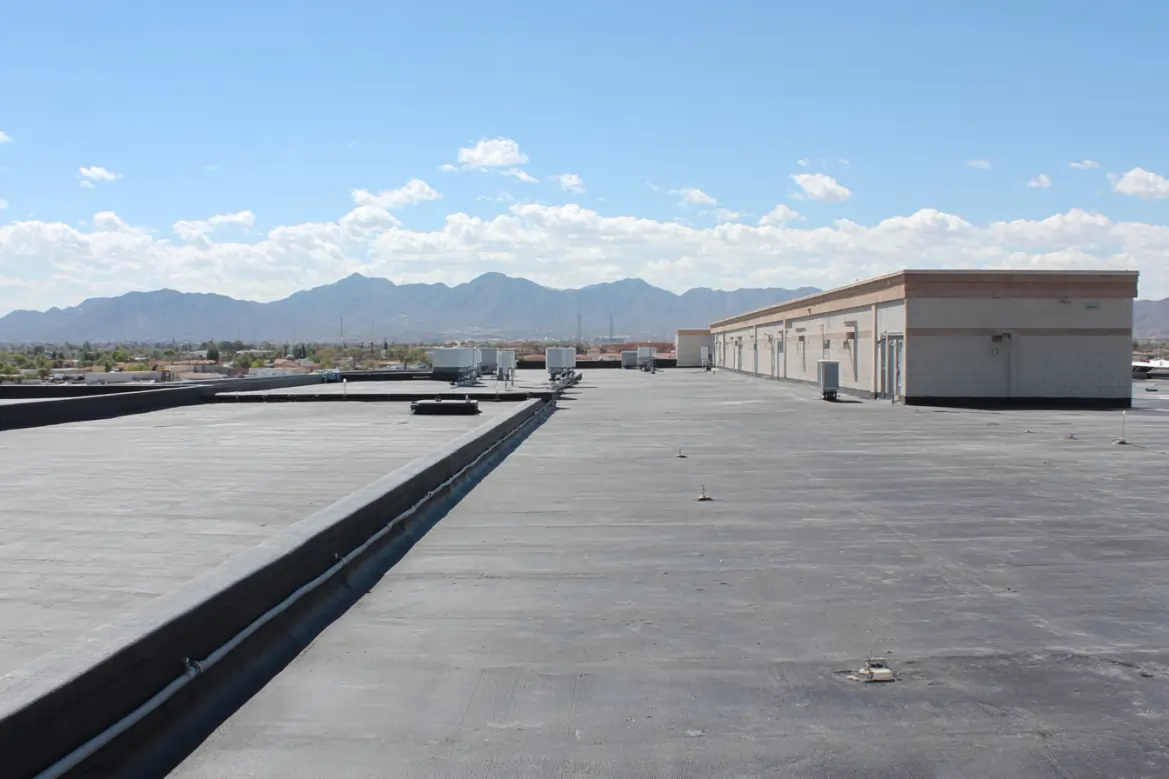
EPDM is a well-known commercial roofing material with a long track record in the industry. It has been used on many flat and low-slope buildings for years and is often valued for its durability, flexibility, and proven performance. But when it comes to warehouses in the Southwest, EPDM is usually not the first system that comes to mind.
Strengths of EPDM
One of the main advantages of EPDM is that it is a tested and familiar roofing option. It has a reputation for holding up well over time when properly installed and maintained. It can also be a practical choice for certain retrofit projects or for buildings where the existing roof assembly makes EPDM a logical fit.
Challenges in Hot Southwest Climates
The biggest drawback of traditional EPDM in the Southwest is heat absorption. Because it is commonly black or dark in color, it tends to absorb more solar heat than reflective roofing systems like TPO or PVC. On warehouse buildings with large roof surfaces, that can be a disadvantage in regions where extreme heat and prolonged sun exposure are major concerns.
For owners focused on energy efficiency and lowering rooftop heat gain, EPDM may not be as attractive as more reflective alternatives. That does not make it a bad system, but it does mean it may be less aligned with the priorities of many warehouse owners in hot climates.
Best Fit
EPDM can still make sense in certain situations, especially where reflectivity is not the top priority or where building conditions make it a reasonable roofing option. However, for many warehouses in the Southwest, more reflective systems will often be better aligned with the climate and the building’s performance goals.
Metal Roofing for Warehouses
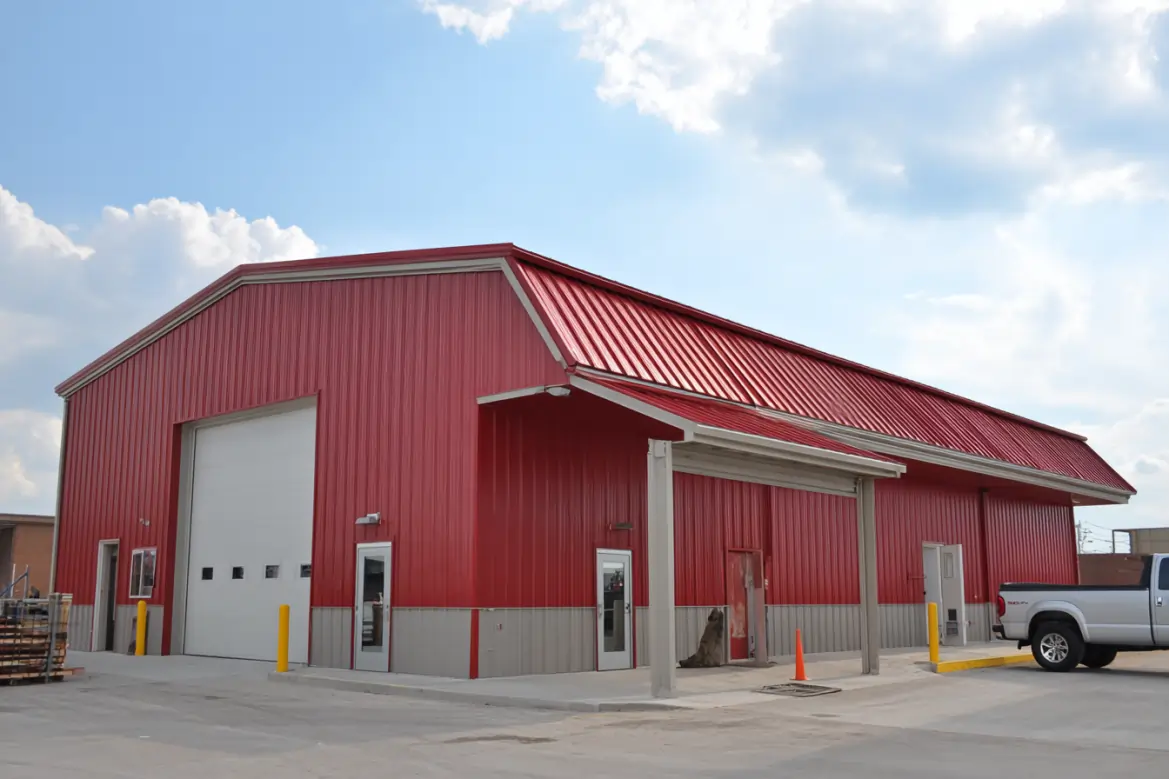
Metal roofing can be an excellent option for warehouse buildings, especially when long-term durability and lifecycle value are top priorities. While it is not the right fit for every structure, it is often one of the strongest choices for warehouses with sloped roof designs or owners who want a system built for long-term performance.
Why Metal Works Well for Some Warehouse Buildings
One of the biggest advantages of metal roofing is its durability. A properly designed and installed metal roof can handle years of sun exposure, weather, and daily wear while maintaining strong structural performance. For warehouse owners, that can make metal an attractive option when the goal is to invest in a roofing system with long-term staying power rather than simply choosing the lowest upfront cost.
Metal roofing is also well suited for many industrial and commercial buildings because it performs well across large roof spans and can be engineered for demanding conditions.
Benefits in the Southwest
In the Southwest, metal roofing can offer strong performance against intense sun and heat when the right system and finish are selected. It is also a solid option for buildings that need a durable exterior capable of standing up to wind, seasonal storms, and long-term exposure.
For owners thinking in terms of lifecycle cost, metal roofing can be especially appealing. Even if the initial investment is higher than some membrane systems, the long-term value may justify the cost for the right warehouse property.
Potential Limitations
Metal roofing is not ideal for every warehouse. Many warehouse buildings have flat or low-slope roofs where membrane systems are often more practical. Upfront cost can also be higher, and details like penetrations, transitions, and retrofit conditions need to be handled carefully.
Best Fit
Metal roofing is often a strong fit for warehouses with sloped roof designs, industrial buildings focused on long-term durability, and owners who want a roofing system built around lifespan and performance rather than just initial budget.
Roof Coatings for Existing Warehouse Roofs
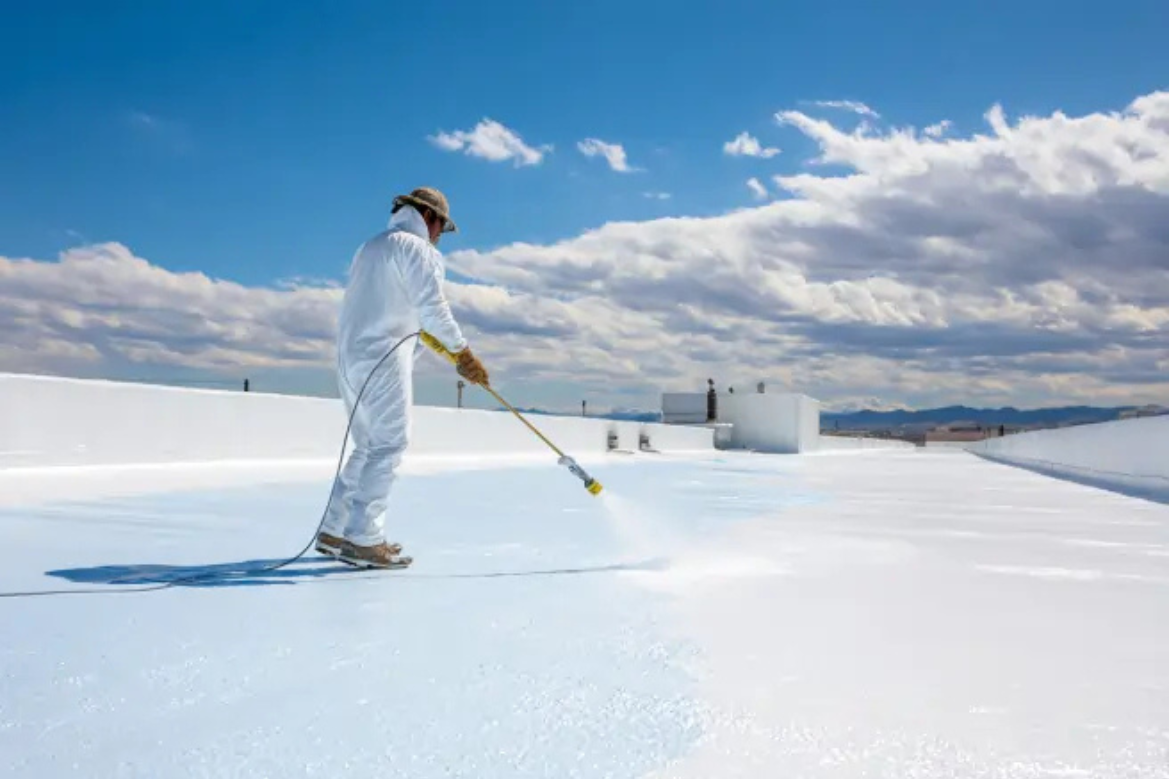
Roof coatings can be a smart option for warehouse owners who are not ready for a full roof replacement and still have an existing roof that is in serviceable condition. While a coating is not a full roofing system in the same way as TPO, PVC, EPDM, or metal, it can be an effective restoration strategy when the roof still has useful life left.
When Coatings Make Sense
A roof coating is typically considered when the existing warehouse roof is structurally sound but showing signs of age, weathering, or surface wear. In these cases, the goal is not to build a brand-new roof system from scratch, but to restore and protect the one already in place. For warehouse buildings, this can be especially attractive when the owner wants to extend roof life while avoiding the disruption of a full tear-off project.
Benefits of Roof Coatings
One of the biggest advantages of coatings is that they can improve reflectivity and help reduce heat absorption on a large warehouse roof. In the Southwest, that can support better energy performance and help protect the roof from additional sun-related wear.
Coatings can also be less disruptive than a full replacement. For some warehouse operations, minimizing downtime and avoiding major interruption is a significant factor. When the existing roof qualifies, a coating can offer a practical and budget-conscious way to gain additional service life.
Limitations to Keep in Mind
Not every warehouse roof is a good candidate for a coating. If the roof has significant moisture intrusion, widespread deterioration, major structural issues, or a failing system, a coating may only delay the larger problem rather than solve it. That is why a professional inspection is critical before moving forward.
Best Fit
Roof coatings are often best for warehouse owners who want to extend the life of a still-serviceable roof, improve reflectivity, and postpone full replacement while continuing to protect the building. When used in the right situation, they can be a valuable part of a long-term roof asset management plan.
Which Roofing System Is Best for a Warehouse in the Southwest?
The best roofing system for a warehouse in the Southwest depends on the building, the condition of the existing roof, and the owner’s long-term goals. There is no one-size-fits-all answer, but some systems stand out more clearly depending on the situation.
Best Overall for Many Flat Warehouse Roofs
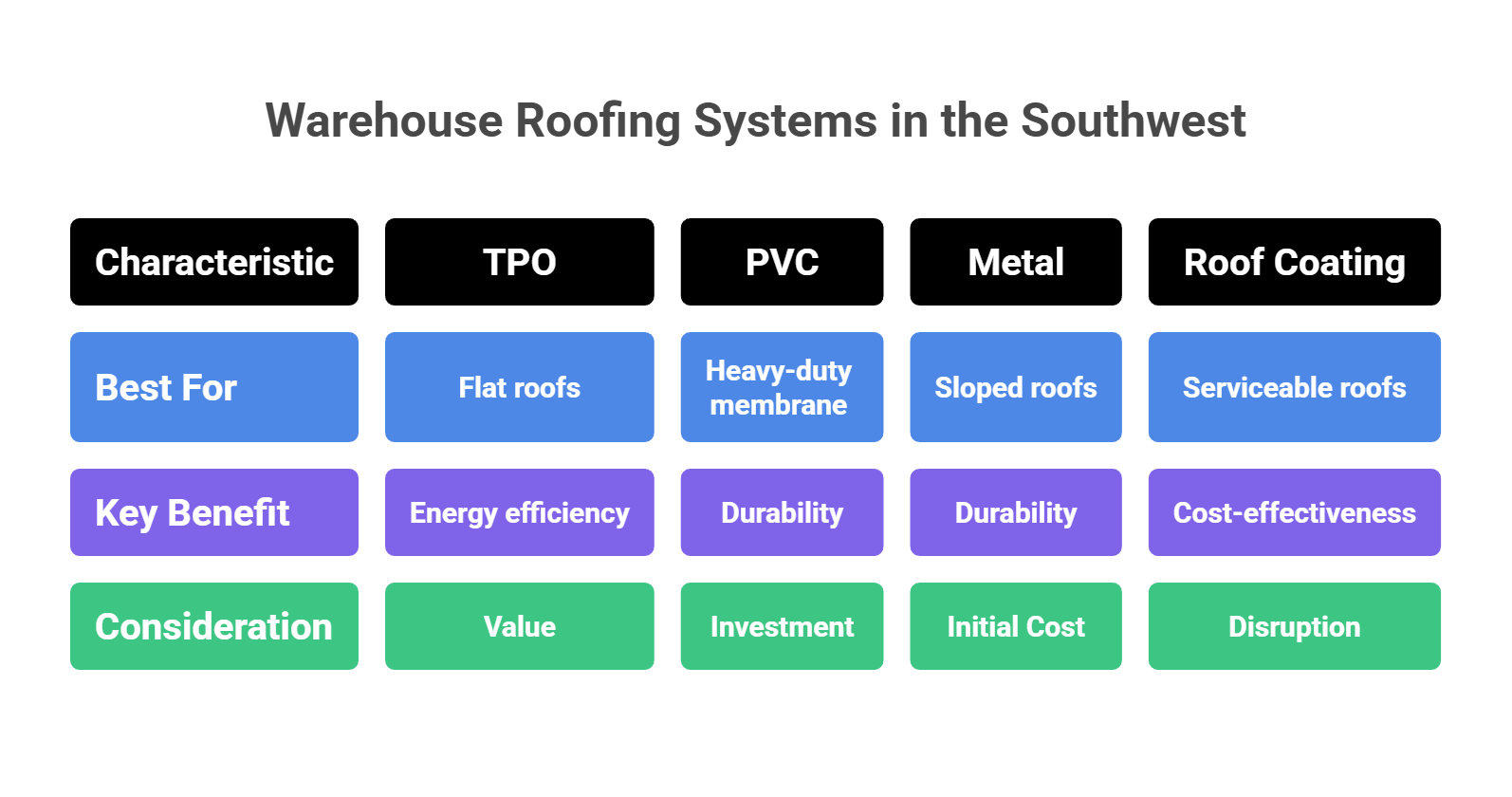
For many warehouse buildings with flat or low-slope roofs, TPO is often one of the strongest all-around options. It offers a practical balance of energy efficiency, waterproofing performance, and overall value, which makes it a popular choice for large commercial buildings in hot climates.
Best Premium Membrane Option
PVC is often the better fit when a warehouse needs a more heavy-duty membrane and the owner is willing to invest more upfront for added durability. In buildings with more demanding rooftop conditions or higher performance expectations, PVC can be a strong long-term choice.
Best for Long-Term Durability
Metal roofing is often one of the best options for warehouses with sloped roof designs or owners focused on long-term lifecycle performance. It may come with a higher initial cost, but for the right building, it can deliver excellent durability and value over time.
Best Restoration Option
If the existing warehouse roof is still in serviceable condition, a roof coating may be the smartest option. Coatings can help extend roof life, improve reflectivity, and reduce disruption when a full replacement is not yet necessary.
What the Final Decision Depends On
The right system ultimately depends on roof slope, existing roof condition, budget, energy goals, maintenance expectations, and how the warehouse is used. That is why the best roofing decision comes from evaluating the building as a whole rather than choosing a material based on general popularity alone.
Key Factors to Consider Before Choosing a Warehouse Roof
Choosing the best roofing system for a warehouse is not just about comparing materials side by side. The better approach is to look at how the roof needs to perform for that specific building, in that specific climate, over the long term. Several factors should shape the decision.
Building Use
Not all warehouses operate the same way. Some are used primarily for storage, while others support manufacturing, logistics, distribution, or temperature-sensitive operations. The way the building is used can affect how important waterproofing reliability, energy efficiency, rooftop access, and long-term durability are to the overall decision.
Existing Roof Condition
The condition of the current roof is one of the first things that needs to be evaluated. In some cases, the roof may still be a candidate for restoration or coating. In others, underlying damage, trapped moisture, or widespread deterioration may make full replacement the more responsible choice. The right solution depends heavily on what is already in place.
Energy Performance Goals
Because warehouses often have very large roof surfaces, the roofing system can play a major role in indoor heat gain and cooling costs. Owners who want better energy performance may place more value on reflective systems and assemblies designed to reduce heat absorption.
Maintenance Expectations
Some roofing systems are better aligned with owners who want a straightforward, low-maintenance solution. Others may require more ongoing attention depending on the building, the amount of rooftop traffic, and the complexity of the roof layout. Maintenance should be considered as part of the long-term ownership strategy, not as an afterthought.
Budget and Lifecycle Planning
Upfront price matters, but it should not be the only factor. A lower-cost roofing system is not always the better investment if it leads to shorter service life, more repairs, or lower overall performance. For many warehouse owners, the smarter decision comes from balancing initial cost with long-term value.
Local Climate Exposure
Southwest climate conditions should also be part of the decision. Heat, UV exposure, wind, seasonal storms, and thermal movement all affect how a roof system performs over time. A system that works well in one region may not be the most practical choice for a warehouse in Phoenix, San Diego, Las Vegas, or another Southwest market.
The Best Warehouse Roof Is the One That Fits Your Building
The best commercial roofing system for a warehouse in the Southwest depends on the building, the condition of the existing roof, and the owner’s long-term priorities. For many flat and low-slope warehouses, TPO is often one of the strongest all-around options because it offers a solid balance of performance, efficiency, and value. PVC can be a better fit for more demanding environments, metal roofing stands out for long-term durability on the right building type, and roof coatings can be a smart solution when an existing roof still has useful life left.
The key is to match the roofing system to the warehouse rather than assume one material is always best. Climate exposure, budget, building use, and maintenance expectations all play an important role in that decision.
If you own or manage a warehouse in the Southwest, SW Commercial Roofing can evaluate your existing roof and help you choose the right system for your building, budget, and long-term goals.